11-12 Upper Crescent, BT7 1NT
About Regency House
Upper Crescent is an elegantly curving terrace in south Belfast, constructed in 1846 by timber merchant Robert Corry. Designed in a late Regency style, the three-storey townhouses face a small park in the centre and are situated in the University Quarter, near Queen's University. Over the years, the area has evolved from a prestigious residential address to a mix of residential and commercial uses.
11-12 Upper Crescent, known as Regency House, had been converted into self-contained apartments following planning approvals in 2019. The current application seeks to repurpose these apartments into luxury guest accommodations, reflecting a trend in the area toward high-end tourism developments.
Historical Background:
The properties at 11-12 Upper Crescent have a rich history:
Construction and Early Occupants (1846): Built by Robert Corry, No. 11 was first occupied by James Greene, the first clerk of Belfast’s Custom House; No. 12 was home to Sir Robert Boag, a textile merchant who founded the Albion Clothing Company and served as Lord Mayor of Belfast in 1876.
Conversion to Offices (By 1970): Both properties transitioned from residential use to offices by 1970 and were officially listed as historic buildings in September 1979.
Acquisition and Refurbishment Attempts (2015-2016): Aurient Ltd acquired the buildings in 2015 with intentions to refurbish them for office use. Renovation work commenced in October 2016 but ceased by the end of that year.
Planning Approvals for Residential Use (2019): In April 2019, two planning applications were submitted by Aurient Ltd (
LA04/2019/0898/F & LA04/2019/0929/F) to convert the properties into six self-contained apartments, which were approved in October 2019.
Future Proposals:
In January 2025, Aurient Ltd submitted a planning application (LA04/2025/0211/F) proposing to transform Regency House from self contained apartments to luxury guest accommodation with associated guest pantry, open courtyards, laundry and bin/bicycle store. There are no proposed building works, as the internal layouts remain unaffected. This proposal aligns with recent developments in Upper Crescent, where other historic properties have been restored for high-end tourism purposes.
In August 2025, it was announced that a four-year £7 million restoration project located at Regency House was completed adding 7,275 sq. ft to the boutique townhouse’s existing footprint, the restoration spans four floors across two additional landmark Grade II listed Georgian terrace buildings at 14 and 15 Upper Crescent. Eight new bedrooms have now been added to the property’s six existing one-bedroom and two-bedroom suites, with a restaurant added on the ground floor.
Project Information
Project Team
Loading
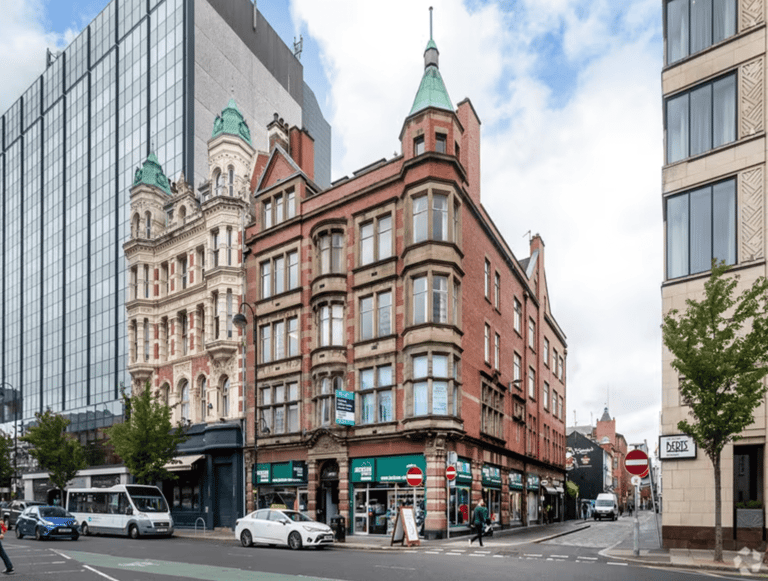
Imperial Buildings
Updated a year ago
Imperial Buildings is a four storey, with attic, commercial and office building located at 70-74 High Street. Imperial Buildings was designed by W.J. Gilliland and constructed 1906-7. The building enters valuation records in 1908 as two shops, valued at £83 and £110 and 33 offices on the first to fourth floors with valuations from £3.10s to £29. It was reerected from the second floor up, with some details missing, after it was damaged during a Luftwaffe raid in 1941. The building has provided accommodation for a number of companies and organisations including Farrow’s Bank Ltd, the Ulster Teachers’ Union and local offices for the Daily Mail and other newspapers (Street Directories). Since the 1970s the ground floor shops have been occupied by a sports goods retailer (Jackson Sports).
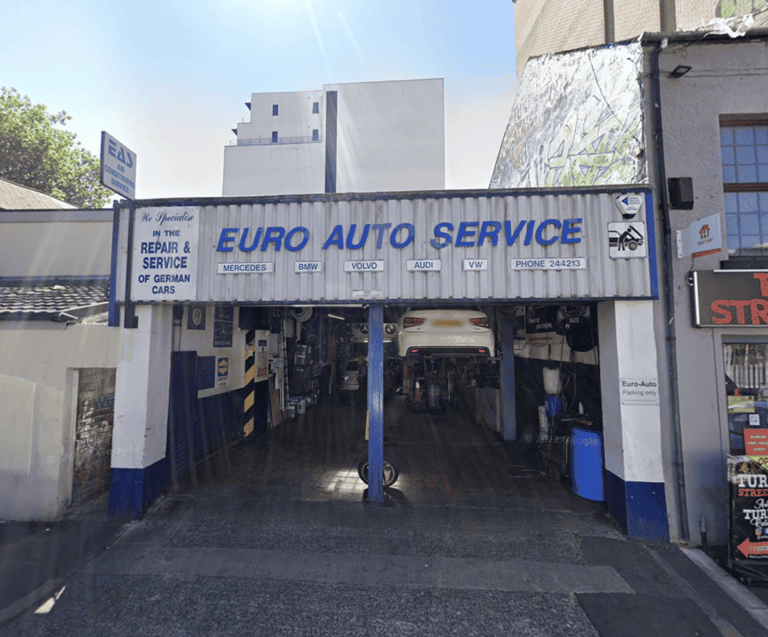
Liquor XXX
Updated a year ago
2a Ventry Street is located in Belfast city centre, near Dublin Road. The site is in proximity to a previously established entertainment complex, which included venues such as Filthy McNastys, The Secret Garden, Filthy Chic, The Gypsy Lounge, and Liquor XXX.

4 College Square North
Updated a year ago
4 College Square North is currently a undeveloped strip of land that sits between a historic end terrace and a small area of landscaped amenity space along College Avenue. The site previously contained buildings which formed the end of the College Square North terrace, but Nos 1-4 were cleared to make way for road ‘improvements’ and widening as part of an inner ring in the 1970’s.
