5 - 11 Arthur Square, BT1 5PY
About Mayfair Buildings
The Mayfair Buildings, a Grade B1 listed building, occupy a prominent position at the junction of Arthur Square and William Street South, in the heart of Belfast’s primary commercial and retail core. Arthur Square forms part of a highly pedestrianised network connecting Donegall Place, Cornmarket, Castle Lane and the wider Linen and Cathedral Quarters. The surrounding area is characterised by high footfall, a dense mix of retail units, cafés, restaurants, cultural venues and civic buildings.
The site is strategically located within walking distance of major transport hubs, including Belfast Grand Central Station and Lanyon Place Station, and benefits from extensive bus connectivity via Donegall Square and surrounding streets. The area is subject to parking restraint policies and is designed to prioritise pedestrian movement and public transport accessibility.
The building lies within the Belfast City Centre Conservation Area, where development is required to preserve or enhance the character and appearance of the historic environment. The surrounding townscape includes a concentration of late nineteenth- and early twentieth-century commercial buildings, many of which are listed or locally important.
The Mayfair Buildings contribute significantly to the architectural enclosure and historic character of Arthur Square, forming a key visual reference point due to their corner turret, gabled elevations, red-brick construction and distinctive “Mayfair” lettering integrated into the façade.
The Mayfair Buildings were constructed between 1906 and 1907, designed by the Belfast architectural practice Blackwood & Jury and built by Robert Corry. The building is a substantial Edwardian commercial structure of red brick with sandstone detailing, exhibiting strong Art Nouveau influences.
Key architectural features include:
Red-brick façades with horizontal sandstone banding
Decorative stone quoins and pilasters
A prominent octagonal corner turret with ogee roof
Gabled elevations with curved stone string courses
Original timber sash windows of varying forms
Ornamental ironwork to eaves brackets and rainwater goods
The building rises to four storeys with attic accommodation and was originally designed with ground-floor retail units and office accommodation above, a common typology within Belfast city centre during the early twentieth century.
In 1975, planning permission was granted for a significant extension along William Street South. This later phase introduced a curved frontage and open-plan office floors constructed using mid-twentieth-century concrete framing methods. While architecturally more restrained than the original Edwardian block, the extension respects the overall height, scale and building line of the street.
The extension incorporated updated service cores, staircases and fire escape routes to comply with contemporary standards at the time. It now forms an integral part of the overall building and accommodates a significant proportion of the upper-floor floor area proposed for conversion under the current application mayfair design and access c.
The ground floor of the Mayfair Buildings remains in active retail use, with individual shop units fronting Arthur Square and William Street South. These units form part of Belfast’s established city-centre retail environment and are occupied by a range of commercial operators.
The current application proposes no change to the use of the majority of ground-floor units. One small retail unit fronting William Street South is proposed to be repurposed internally to create a dedicated entrance lobby to serve the upper-floor hostel accommodation.
The upper floors are currently used as offices (Class B1) or are vacant. The internal layouts reflect a combination of historic cellular office arrangements within the original building and larger open-plan floors within the 1975 extension. Over time, demand for such accommodation has declined, resulting in underutilisation of the upper floors.
In November 2025, Alterity Investments submitted a planning application (LA04/2025/1911/F) seeking permission for:
Change of use of existing upper floors from offices (Class B1) to hostel accommodation
Provision of 136 bedspaces, arranged across multiple floors
Associated communal lounges, kitchens, sanitary facilities and wellness spaces
Internal reconfiguration of existing floorplates
Creation of a new entrance lobby at ground-floor level within one existing retail unit
Minor external alterations limited to new door openings
No increase in building footprint, height or massing is proposed, and the external envelope is largely retained. The proposed hostel development will be operated by Revolver Hostels.
The hostel accommodation is distributed across the upper floors, with a mix of:
Pod-style dormitory accommodation
Private double and family rooms
En-suite and shared sanitary facilities
Communal lounges and shared kitchens
Ancillary spaces including laundry, storage and staff facilities
Wellness and recreational facilities, including a gym and spa-related spaces, are also proposed at upper levels, consistent with contemporary hostel models operating in city-centre locations.
Prior to the construction of the Mayfair Buildings, the site was occupied by smaller-scale buildings including the Talbot Bar and a City Toilet Club, reflecting the dense and functional nature of Belfast’s historic core during the nineteenth century. Arthur Square itself has origins linked to Belfast’s early market and trading activity and has been a recognised civic space since at least the early nineteenth century.
Since completion, the Mayfair Buildings have been in continuous commercial use. The ground-floor units have hosted a succession of retail tenants, while the upper floors accommodated offices for professional services, civic organisations and commercial enterprises. Notable historic occupants included solicitors, tailors, cafés, manufacturers and political organisations.
The building was listed in 1979, reflecting growing recognition of its architectural and historic value. Despite this, the internal accommodation has been subject to change over time, with proposals periodically brought forward to adapt the upper floors to new uses.
The site has a documented planning history that includes:
Approvals for shopfront alterations and retail fit-outs
Internal office reconfigurations
Building services upgrades
A 1999 planning permission for the conversion of upper floors to student accommodation, which was not implemented
The current proposal continues a long-standing pattern of seeking to reuse the upper floors for alternative, more viable uses, while retaining retail activity at ground level.
Project Information
Floors
4
Planning References
LA04/2025/1911/FLA04/2025/1911/F
Project Team
Loading
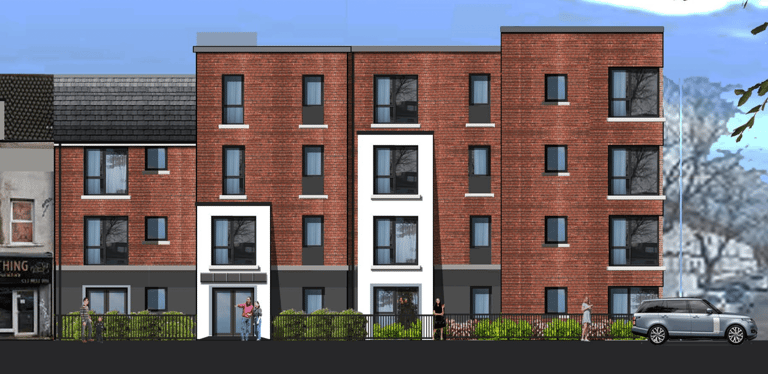
42-50 Ormeau Road
Updated 2 years ago
42-50 Ormeau Road is a 0.17 acres (0.07 hectares) site which is located at the corner of Ormeau Road and Shaftesbury Avenue and has frontage to Cooke Mews. The site is currently vacant and is surrounded by metal fencing and two advertising boards.
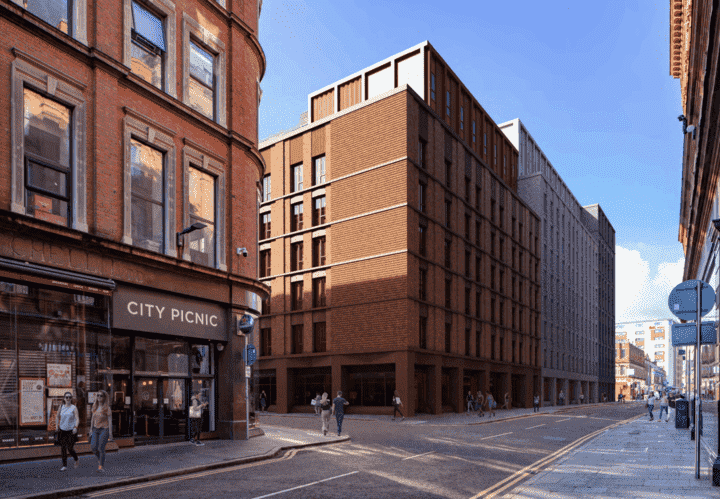
Norwich Union House
Updated 9 months ago
Norwich Union House is six storey retail and office building extending to c37,000 sq ft. The building comprises 8 retail units on the ground floor along with five floors of office space on the upper floors. The site also has a 200 space multi storey car park. The 6-8 Queen Street site is currently vacant. Norwich Union House was previously a World War 2 bomb site and was constructed in the 1960s for Norwich Union. The site has since been acquired by McAleer & Rushe for redevelopment.
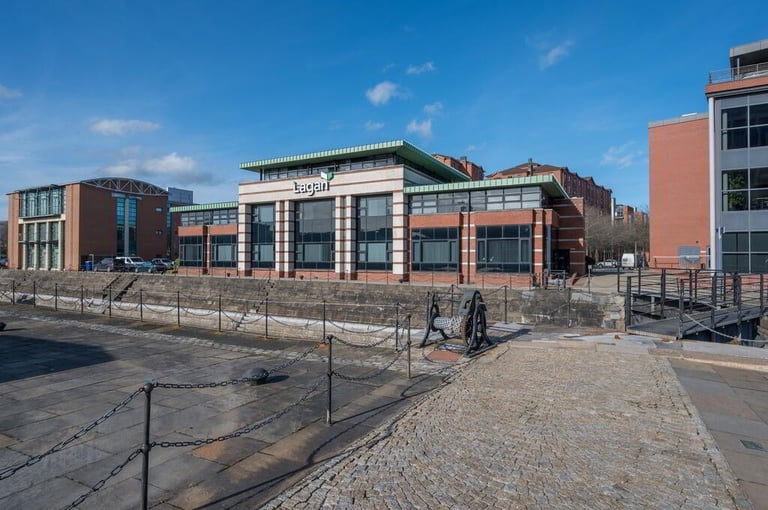
Lagan House
Updated a year ago
Lagan House is a three storey building, constructed in 2005, located at 19 Clarendon Road. The site lies within the Belfast Harbour Estate and is presently occupied as office premises, overwhelmingly by entities connected to Lagan Group. The upper floors of the building are in use by various companies under the Lagan Group umbrella—Lagan Homes entities, Lagan Infrastructure Ltd, Lagan Property Investments Ltd, etc.—operating in sectors such as property development, construction, and real estate investment.
