Library Street, BT1 2JE
About Library Street Student Accommodation
The development site currently comprises a vacant brownfield site at lands bounded by Library Street (to south); Stephen Street (to west); Little Donegall Street (to north); and Union Street (to east).
Library Street at one time was known as Mustard Street and was named so from Richard Calwell & Co’s works which were ‘for the manufacture of Flour of Mustard’. The site previously comprised of industrial buildings and also residential dwellings. There were originally around eighty houses which were small and occupied in 1861 by tobacco spinners, a blacksmith and people like Mary Neil, a ‘mangler’. Many of the houses were demolished around 1890 to allow the street to be redeveloped mainly for warehouses and industrial purposes, at which time it was renamed Library Street, from the new Public Library on nearby Royal Avenue. As industry declined the industrial buildings were demolished with the last remaining buildings demolished around 2016. A section of the site served as a public car park whilst the sections of the site along Library Street and Stephen Street remained derelict for a number of years.
In March 2008, Straben Developments Ltd submitted a planning application (Z/2008/0655/F) proposing a mixed use development comprising of 253 no. apartments, retail units and associated basement car parking. This application was approved in June 2009.
In June 2015, Northside Regeneration Ltd (a partnership by Benmore Group and Balfour Beatty) submitted a planning application (LA04/2015/0577/O) proposing a mixed use regeneration scheme comprising community, residential, commercial, local retail, leisure and managed student accommodation uses and areas of public realm. This £300m redevelopment project was known as Northside and focused on an area between Royal Avenue and the Westlink. Northside Regeneration Ltd were selected by the Department for Social Development (DSD) to deliver the project in 2014. However, in 2016, the Department for Social Development (DSD) pulled out, saying developers "should no longer benefit from the potential use of the department's statutory powers". This was due to the project being refused outline planning permission in January 2016.
In February 2022, Mandeville Developments NI Ltd submitted a Proposal of Application Notice (LA04/2022/0541/PAN) proposing the erection of a Purpose Built Managed Student Accommodation (PBMSA) development comprising up to 800 units with communal facilities, internal amenity courtyard, cycle stores and active ground floor uses including cafe and retail.
In June 2022, Mandeville Developments NI Ltd submitted a planning application (LA04/2022/1284/F) proposing the erection of a Purpose Built Managed Student Accommodation (PBMSA) development comprising 795 units with additional use of accommodation by further or higher education institutions outside term time, communal facilities, internal amenity courtyard, cycle stores, active ground floor uses including cafe and retail, and associated bin stores and plant and public realm improvements to surrounding footpaths. This application was refused by Belfast City Council in March 2023. Belfast City Council concluded that the "excessive scale, height, and massing" would hinder the development of mixed-tenure housing on a nearby car park site designated for social housing.
In January 2025, Mandeville Developments successfully appealed the refusal of planning permission for the 795 units, leading to the application's approval. The PAC report on the case referenced a claim by Queen’s University that there is an estimated shortfall of 6,000 student beds, while Ulster University is said to require 1,700 beds to meet demand.
Project Information
Project Team
Loading
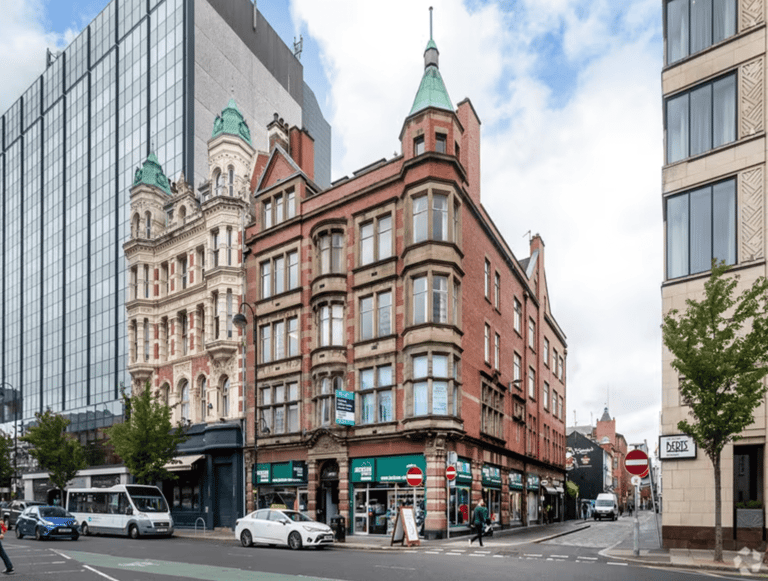
Imperial Buildings
Updated a year ago
Imperial Buildings is a four storey, with attic, commercial and office building located at 70-74 High Street. Imperial Buildings was designed by W.J. Gilliland and constructed 1906-7. The building enters valuation records in 1908 as two shops, valued at £83 and £110 and 33 offices on the first to fourth floors with valuations from £3.10s to £29. It was reerected from the second floor up, with some details missing, after it was damaged during a Luftwaffe raid in 1941. The building has provided accommodation for a number of companies and organisations including Farrow’s Bank Ltd, the Ulster Teachers’ Union and local offices for the Daily Mail and other newspapers (Street Directories). Since the 1970s the ground floor shops have been occupied by a sports goods retailer (Jackson Sports).
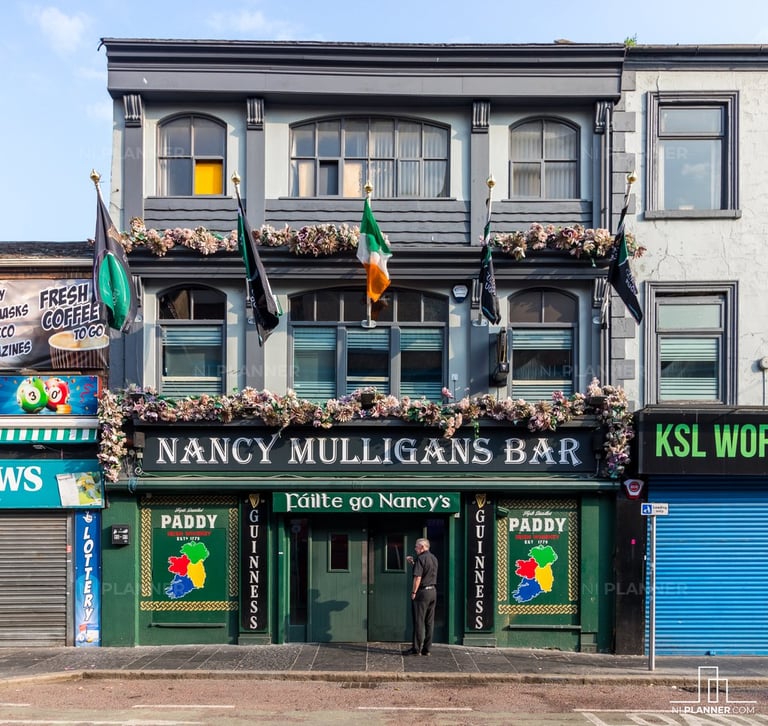
Nancy Mulligans Bar
Updated a year ago
Nancy Mulligans operates as a public house and kitchen, offering live sports, music, casual dining, and evening entertainment. Located within a densely built city centre block, the building is part of a continuous terrace of historic-style structures typical of Castle Street.
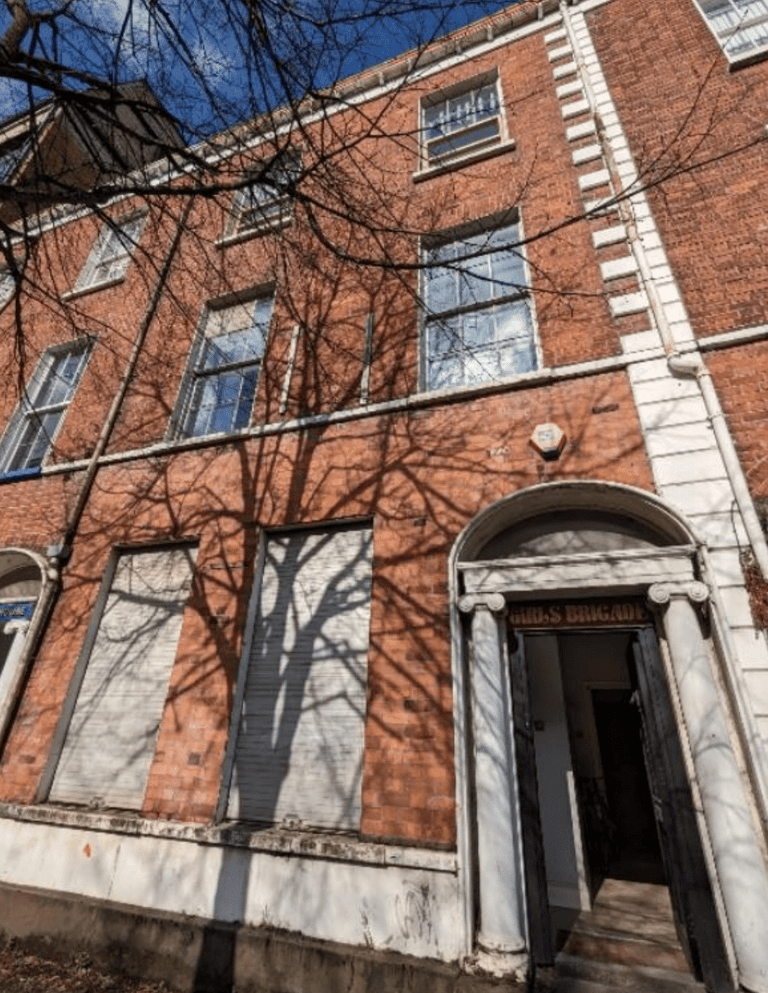
16 May Street
Updated 2 years ago
16 May Street is a B2 listed, three-storey townhouse made of red brick, dating back to approximately 1855. It first appeared on the second edition of the Ordnance Survey maps for Belfast in 1858.
