Divis Road, BT17 0NG
About Divis and The Black Mountain National Trust Site
Divis and the Black Mountain, prominent features of the Belfast Hills, play a crucial role in the region’s landscape, history, and recreational offerings. Rising to 1,568 feet (478 meters) and 1,275 feet (389 meters) respectively, these peaks provide panamoric views over Belfast and beyond, making them a key destination for nature enthusiasts and conservation efforts alike.
Positioned on the edge of Belfast, Divis and the Black Mountain form an important natural escape within an urban setting. Their rugged terrain, diverse habitats, and open moorland serve as a vital green corridor, linking the city to the surrounding countryside. Since 2004, the National Trust has managed the area, preserving its ecological integrity while ensuring public access. The site now covers roughly 2,600 acres of heath and grassland, offering both environmental and recreational benefits.
Today, the area is well known for outdoor activities, particularly hiking and wildlife observation. A network of well-maintained trails, including the popular Summit Trail, Ridge Trail, and Lough Trail, attracts visitors of all abilities. These routes cut through different landscapes, ranging from open heath to stone paths and wooden boardwalks, ensuring accessibility across varied terrain. The site is also home to diverse wildlife, including peregrine falcons, skylarks, and grazing livestock, which contribute to habitat management efforts.
A visitor hub provides educational resources and supports community initiatives, reinforcing the site’s role as both a recreational space and a conservation area.
Historically, Divis and the Black Mountain have been integral to local agriculture and community activities. However, in 1953, the Ministry of Defence took control of the area, limiting public access for several decades. It wasn’t until 2004 that the National Trust acquired the land, marking a turning point in its use and management. With funding from The National Lottery Heritage Fund and the Northern Ireland Environment and Heritage Service, the organisation worked to restore the landscape, improve accessibility, and engage the local community in conservation efforts. Over the years, ongoing projects have helped to balance ecological preservation with visitor needs.
The National Trust recently launched a £6 million initiative aimed at further enhancing the site’s accessibility and environmental health. As part of this plan, an additional 622 acres of land at the base of the mountains have been acquired, expanding the protected area and creating new opportunities for public engagement. This ambitious project, titled "Divis – A View to the Future," is funded by contributions from The National Lottery Heritage Fund (£3 million), the Northern Ireland Environment Agency (£1.5 million), and the Garfield Weston Foundation (£300,000).
In August 2024, The National Trust submitted a planning application (LA04/2024/1458/F) proposing refurbishing three existing vernacular buildings for visitor use and replacing a shed, garage, and agricultural structure with a new amenity building. Additional improvements involve upgrading the pond network, installing new signage and site-appropriate furniture, enhancing existing pathways, creating new routes, and adding site furniture to improve visitor experience and accessibility. This application was approved in February 2025.
Key aspects of the initiative include:
Enhanced Visitor Facilities – The construction of a café, exhibition space, and a new visitor hub will provide more amenities for those exploring the area.
New and Improved Trails – Additional walking routes and upgraded paths will improve accessibility and encourage greater public use.
Environmental Restoration – Peatland and blanket bog restoration will support local biodiversity and contribute to broader conservation efforts.
Community Heritage Initiatives – An oral history project will document local stories and personal connections to the mountain, ensuring that cultural heritage remains a core part of the site’s identity.
With these improvements, the National Trust hopes to make Divis and the Black Mountain one of the most accessible green spaces in the UK and Ireland. The expanded land is set to open by 2025, providing even more opportunities for recreation, education, and conservation.
Project Information
Planning References
LA04/2024/1458/F LA04/2024/1458/F
Project Team
Loading
Waring Street Hotel
Updated 2 years ago
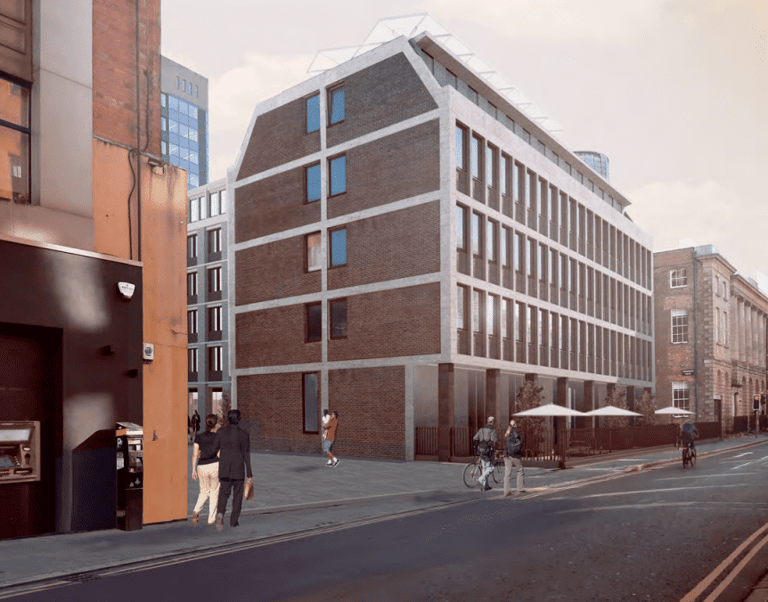
9-13 Waring Street (the War Memorial Building) is a five storey B2 Listed Building (HB Ref No: HB26/50/259) constructed in 1959 -1962 and was designed by English architect J Michael Bowley. The building was opened by the Queen Mother in 1963 and initially provided offices for charities and organisations linked to the Armed Forces. The building was formerly the Queen Anne Hotel, but it was blown up during the Belfast Blitz in 1941.
Belfast Stories
Updated 6 months ago
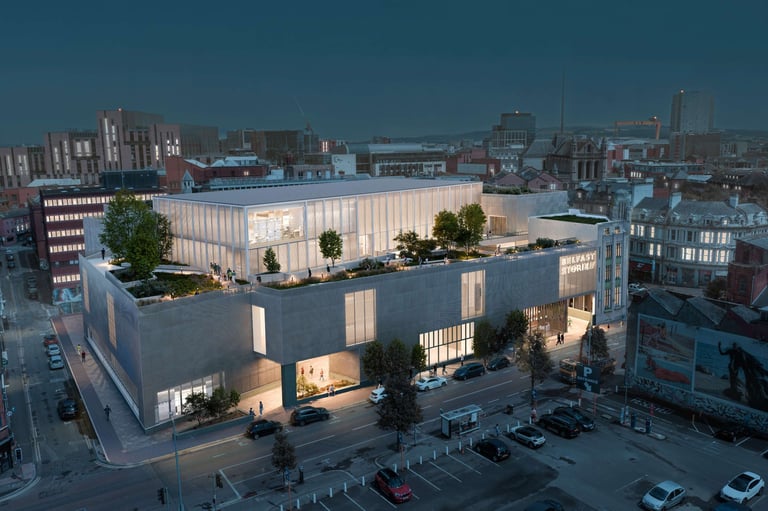
The Belfast Stories project is a major cultural development in Belfast city centre. Spearheaded by Belfast City Council, and part-funded through the Belfast Region City Deal, the development is scheduled to be completed by 2030 and will transform a key urban site on Royal Avenue and North Street into a multi-purpose cultural and tourism destination. This development represents a critical urban regeneration initiative and is located on a historically significant portion of the city that has experienced substantial physical and social decline over recent decades.
Nine Lanyon Place
Updated a year ago
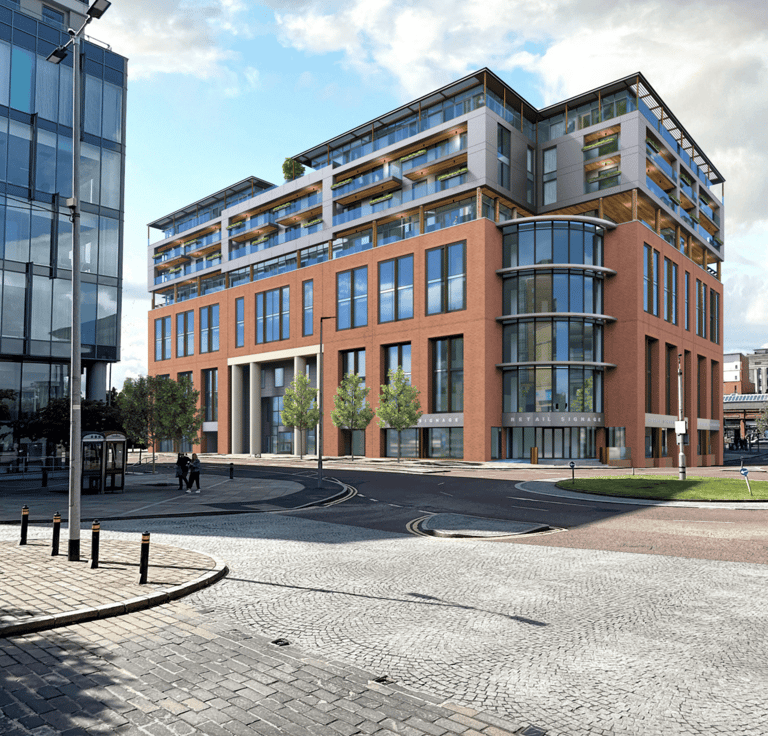
Nine Lanyon Place is situated at Lanyon Quay in Belfast city centre, adjacent to the Waterfront Hall and near Belfast Central train station.
