Clarendon Wharf, BT1 3BG
About Clarendon Wharf
Clarendon Wharf occupies a prominent position at the northern edge of Belfast City Centre, within the inner Belfast Harbour area. The site sits immediately north of the Cathedral Quarter and is within walking distance of the core retail, commercial and cultural areas of the city centre. Corporation Street forms the principal western boundary and is a key arterial route linking the city centre with the M3 and York Street transport corridor.
The surrounding area is characterised by a mix of historic dock infrastructure, former industrial buildings, surface car parking, and more recent regeneration schemes such as City Quays. To the north and east, the operational port and associated infrastructure remain active, while to the south and west the urban grain transitions toward denser city centre development.
Clarendon Dock itself is a defining feature of the site, providing a substantial enclosed water body that contributes to the maritime character of the area and offers opportunities for waterside public realm and leisure uses. The presence of listed buildings and historic dock structures within the site establishes a strong heritage context that influences both layout and scale of new development.
At present, the Clarendon Wharf site is largely underutilised. Significant portions of the land comprise vacant plots, surface-level car parking, and areas of hardstanding associated with former dock and industrial activity. While parts of the surrounding harbour remain operational, the application site itself no longer performs a primary industrial or port function.
Several historic structures remain on site, including the Clarendon Building, Furnace House, and Pump House, which are listed and associated with the historic dock infrastructure. These buildings are currently vacant or in limited use, contributing little to the active street frontage or public realm. Clarendon Dock remains intact as a physical structure but is not presently configured for active leisure or public use.
Clarendon Wharf forms part of Belfast’s nineteenth-century dock system, developed during a period of rapid industrial and maritime expansion. The docks and associated buildings were integral to the city’s role as a major port and industrial centre, supporting shipbuilding, trade, and manufacturing activities linked to the River Lagan and Belfast Harbour.
Over time, changes in shipping technology and port operations resulted in a gradual decline in the use of inner harbour docks. As port activity moved further north and east, areas such as Clarendon Wharf became increasingly redundant. While some structures were retained and later listed due to their architectural and historic interest, large parts of the site fell into disuse.
In recent decades, the focus for the area has shifted from heavy industry to regeneration and mixed-use urban development. This transition mirrors wider patterns across Belfast’s waterfront, where former docklands have been re-imagined as residential, commercial, and leisure neighbourhoods while retaining elements of historic character.
The Clarendon Wharf area has been subject to a number of feasibility studies, masterplanning exercises and pre-application discussions over several years. Earlier planning approvals and proposals in the wider context include regeneration schemes along Corporation Street and Princes Dock Street, as well as the consented Pilot Street Affordable Housing development adjoining the site, which has informed approaches to flood mitigation and site levels.
Previous iterations of development proposals for Clarendon Wharf have explored varying densities, land use mixes and building heights. Consultation with Belfast City Council and statutory consultees has influenced successive design refinements, including adjustments to massing, increased breaks between blocks, greater emphasis on active ground floor uses, and the sensitive integration of heritage assets.
The current hybrid application reflects this evolution, combining detailed proposals for initial development plots with an outline framework for future phases, guided by parameter plans and a design code.
In December 2025, Belfast Harbour submitted an outline planning application (LA04/2025/2210/O) seeking hybrid planning permission comprising two principal components:
Plots A and B – Outline Planning Application (No Matters Reserved)
These plots propose the delivery of 456 residential apartments, alongside approximately 1,600 square metres of ground floor commercial floorspace. The commercial uses are intended to include retail (Class A1), financial and professional services (Class A2), community and cultural uses (Class D1), assembly and leisure uses (Class D2), and café, bar and restaurant uses. Associated landscaping, open space, children’s play equipment, public realm works and servicing access from Corporation Street form part of the proposal.
Plots C, D, E and F – Outline Planning Application (All Matters Reserved)
The remainder of the site is proposed for a mixed-use development comprising residential apartments and dwellings, a hotel or apart-hotel, and additional ground floor commercial uses. The application also seeks approval in principle for the change of use of the listed Clarendon Building, Furnace House and Pump House, envisaging café and restaurant uses that would bring these heritage assets back into active use. Clarendon Dock is proposed to be repurposed for leisure-focused uses, enhancing public access to the waterfront.
Across the wider masterplan, the development framework allows for up to approximately 600 new homes, extensive public open space, improved pedestrian and cycle connectivity, and the creation of an integrated waterside neighbourhood.
The Clarendon Wharf proposals are intended to be delivered in phases, with Plots A and B representing the initial stage of development. Subsequent plots will come forward in accordance with the approved masterplan framework, parameter plans and design code.
Future phases are expected to strengthen connections between the city centre, Cathedral Quarter, Sailortown and Titanic Quarter, while supporting Belfast Harbour’s long-term vision for the comprehensive redevelopment of the inner harbour area. The re-use of historic dock buildings and the activation of Clarendon Dock are central to establishing a distinct identity rooted in the site’s maritime heritage.
Project Information
Units
600
Cost
£222,000,000.00
Size
837400 ft²
Floors
26
Planning References
LA04/2025/2210/OLA04/2025/2210/O
Project Team
Loading
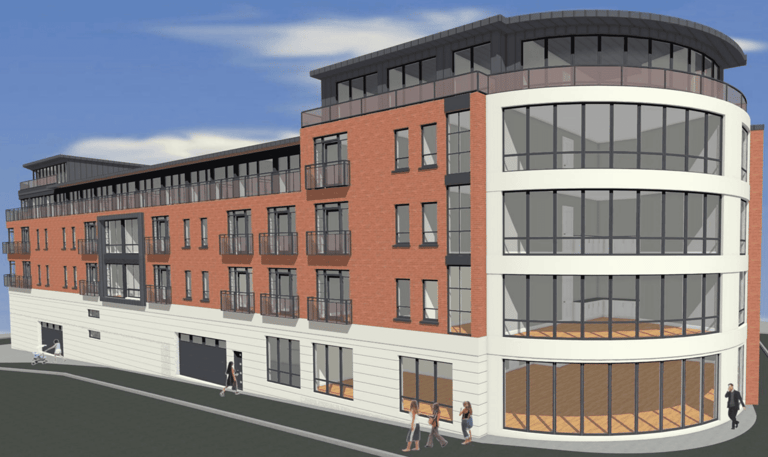
47 Kennedy Way
Updated 2 years ago
47 Kennedy Way is currently occupied by a number of commercial businesses including a car wash and vehicle repair garage.
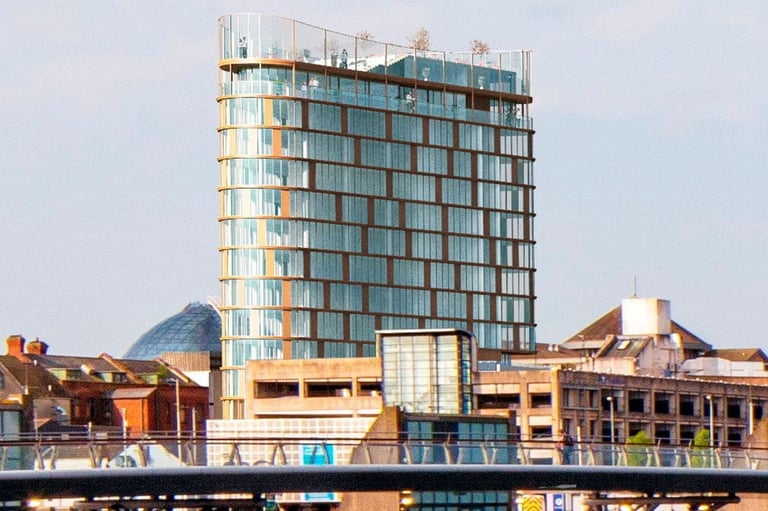
Carlton Hotel
Updated 2 years ago
A new luxury hotel is proposed for 96-108 Ann Street in Belfast, currently the site of The Tipsy Bird Bar & Garden and the vacant Jamison & Green Building (also known as the Prince's Buildings). This development aims to blend historical structures with modern amenities.
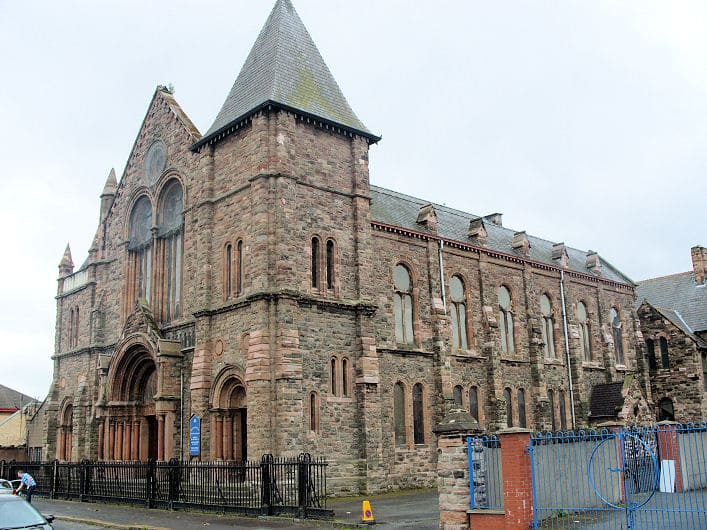
Townsend Street Presbyterian Church
Updated 2 years ago
Townsend Street Presbyterian Church is a Grade B1 Listed Building (HB26/50/169) that was designed by architects Young & Mackenzie and constructed between 1860 and 1879 as part of the church complex constructed by William McCammond of Antrim Road, Belfast. Townsend Street Presbyterian Church was constructed to replace an earlier meeting house that had stood on the site since 1833. The current building opened its doors on the 13th October 1878 and was listed in 1985. The church ceased to provide services on 18th September 2022 due to declining attendance numbers.
