88–104 Anderstonstown Road, BT11 9AN
About Casement Park
Casement Park is a major Gaelic Athletic Association (GAA) venue located on the Andersonstown Road in west Belfast, Northern Ireland. Historically serving as the principal stadium for Gaelic football and hurling in the province of Ulster and the home ground for Antrim county teams, the site has been the focus of one of the most protracted redevelopment projects in Northern Ireland’s sporting infrastructure history. From its origins in the early 20th century to ongoing demolition and remediation in 2026, Casement Park’s evolution reflects decades of planning, legal challenges, funding negotiations, and changing strategic priorities across sports, government, and community interests.
Casement Park occupies approximately 12 acres in the Andersonstown district of west Belfast. For much of its existence, it served as a dedicated venue for Gaelic games, hosting local, provincial, and inter-county fixtures. The stadium’s closure to competitive sport took place in 2013 in preparation for redevelopment, leaving the site largely derelict for over a decade as planning and funding issues were resolved.
As of January 2026, demolition works on the site are set to recommence, with enabling and site clearance works expected to take place during the early months of the year. Residents in surrounding neighbourhoods have been informed that initial demolition and site preparation will be carried out in accordance with the existing planning permission, including the removal of remaining structures and old stands.
The land on which Casement Park stands was originally undeveloped agricultural ground. The Antrim County Board of the GAA started acquiring the site in the early 1930s with funds raised through community fundraising efforts and support from the wider GAA organisation. Paddy O’Keefe, the General Secretary of the GAA, travelled up from Dublin to present the Antrim County Board with £1000 from Central Council. Sean McGettigan, one of the prime movers in acquiring Casement Park, announced in December 1946 that the site had been acquired and paid for. The first major development culminated in the opening of the stadium in 1953 after embankments and terraces were constructed to support spectator facilities. Over subsequent decades, the site became an important focus for Gaelic games in Ulster, hosting major championship fixtures and serving as a focal point for local sporting culture.
In the late 1990s, significant upgrades were undertaken to modernise the stadium’s spectator facilities. Grass banks around the playing field were replaced with concrete terraces in 1997-1999, increasing capacity and allowing larger matches to be held at Casement Park. In October 2005 a planning application was submitted (Z/2005/2326/F) for the addition of four floodlights, enabling fixtures to be played during evening hours; these were completed in 2006. Two years later, in August 2007, permission was granted (Z/2007/2074/F) for the construction of a three-storey control room, new entry gates, and boundary wall modifications, with completion of the control room in 2009. The £1.3 million contract was completed by Downpatrick-based building and civil engineering firm John Turley & Co. Ltd. These later enhancements supported a broader operational use of the stadium in its final years before closure.
A major redevelopment of Casement Park was first proposed in 2009. In 2011, the Northern Ireland Executive allocated funding across a regional stadia programme, including a substantial portion for the redevelopment of Casement Park. This early proposal envisaged transforming Casement Park into a new all-seated stadium to modern standards, with a capacity provision in the region of 38,000. In June 2013, Ulster GAA submitted a detailed planning application (Z/2013/0685/F) reflecting this ambition, including provisions for new stands, training facilities, player accommodation, media facilities, and associated infrastructure. This application was approved in January 2014.
In December 2014, a high court judge quashed the ministerial decision by Environment Minister Mark H Durkan to grant planning approval for the redevelopment of Casement Park. This was the result of a local residents group, the Mooreland and Owenvarragh Residents’ Association (MORA), which objected and went to court, asking for a judicial review. The judge, Mr Justice Horner, ruled the environment minister had acted unlawfully in approving the plan and found the decision-making process had been fundamentally flawed. He identified failures in the environmental impact assessment of the plan and also found that the effect of bigger crowds on the surrounding roads network had not been properly examined. The judge also pointed to the minister never being told of police concerns about safety issues around having 38,000 people attending an event.
Following the overturned approval, Ulster GAA submitted a revised planning application in February 2017 (LA04/2017/0474/F) with a reduced capacity of 34,578 seats and refined supporting infrastructure. This application was called in by the Department for Infrastructure due to its regional importance and underwent a comprehensive review process. Final planning approval was granted in July 2021, enabling the redevelopment project to advance toward implementation. Key components of this approved development include demolition of existing facilities, construction of new stands, enhanced spectator amenities, hospitality and conference spaces, and modern access and circulation arrangements for vehicles and pedestrians.
In July 2022, Ulster GAA also sought planning permission (LA04/2022/1422/A) for stadium hoarding along the front boundary of Casement Park, reflecting preparatory steps toward redevelopment activity ahead of full construction.
In April 2022, the Mooreland and Owenvarragh Residents’ Association (MORA) sought a Judicial Review of former Infrastructure Minister Nichola Mallon’s decision to grant planning permission for the redevelopment of Casement Park. They objected to its size and impact on the surrounding area. In May 2022, High Court judge Mr Justice Humphreys dismissed MORA's legal challenge stating the minister was entitled to approve the planning application without referring it to the executive and did not accept MORA's arguments on a series of alleged errors in the planning process. Mr Justice Humphreys held that other Stormont ministers were fully briefed, and that Ms Mallon retained legal authority to take the decision.
In 2023, when the United Kingdom and Republic of Ireland were selected to co-host the UEFA Euro 2028 football tournament, Casement Park was initially included as a proposed host venue. This inclusion generated significant interest, with the potential to host up to five matches. However, spiralling construction cost estimates and delays in progressing physical works led to concerns about completing the stadium in time for the competition.
In September 2024, the UK Government announced that it would not provide the additional funding required to ensure Casement Park’s redevelopment would be completed in time for Euro 2028, citing a “significant risk” that it would not be ready by the tournament’s deadlines. Cost estimates had risen substantially from earlier figures, with estimates at times cited in the range of £400 million, with government and stakeholder positions acknowledging the growth in projected expenditures.
Nevertheless, both the British and Irish Governments continued to express commitment to supporting the redevelopment as a long-term project. In June 2025, the UK Government allocated £50 million toward the stadium project as part of its spending review, with the Irish Government reaffirming its earlier commitment of approximately €50 million as part of cross-border infrastructure funding. These contributions augmented earlier funding pledges from the Northern Ireland Executive and the GAA itself, with ongoing discussions aimed at securing a comprehensive funding package for construction and completion. Draft Stormont budget provisions in early 2026 also included an inflationary uplift to support the project, with over £100 million proposed between 2026 and 2030.
Early preparatory and enabling works took place in 2024, including initial groundworks and removal of old terracing. Full demolition and clearance activities were anticipated to continue into 2025 and 2026, with key milestones such as demolition of remaining structures and remediation of the site scheduled as part of the phased approach to redevelopment.
In February 2025, the Ulster GAA issued a formal procurement notice inviting submissions for remediation works on the site. This process is designed to prepare the land for future construction by excavating, managing, processing, and disposing of hazardous, non-hazardous, and inert materials identified in site investigations. The remediation phase is a critical precursor to main construction and is expected to involve significant excavation of contaminated material as defined in procurement documentation.
Ulster GAA leadership has indicated that work in 2026 is anticipated to transition toward a formal “delivery phase”, with demolition to be completed and the site prepared for construction once funding and planning conditions are aligned. Statements from organisation officials suggest that principles of phased delivery have been accepted by planning authorities, allowing incremental implementation of the approved scheme to prevent planning permission lapsing and to maintain project momentum. A letter sent by Ulster GAA to residents states: "From week commencing 26th January, our project partners Heron Bros Ltd will take possession of the site to recommence the enabling works for the stadium redevelopment, as previously approved by the statutory authorities. Initial works will involve site preparations, followed by site clearance and the demolition of existing structures within the stadium’s boundary, including the old stand. The enabling works are anticipated to continue for approximately 12 weeks."
The approved redevelopment scheme envisages a modern, all-seated stadium with a capacity around 34,500, improved spectator facilities, and ancillary spaces to support community, cultural, media, and commercial activities. Once realised, the new Casement Park is expected to serve not only as a focal point for Gaelic games in Ulster but also as a venue capable of hosting a broader range of sporting and cultural events.
The strategic priority for stakeholders remains securing sufficient funding to complete the project, managing rising construction costs, and implementing the programme through phased delivery while meeting planning and regulatory conditions.
See flythrough of Casement Park re-development proposals here.
Project Information
Start Date
January 2023
Completion Date
January 2028
Cost
£260,000,000.00
Size
495140 ft²
Floors
4
Planning References
LA04/2017/0474/FLA04/2017/0474/F
Project Team
Loading
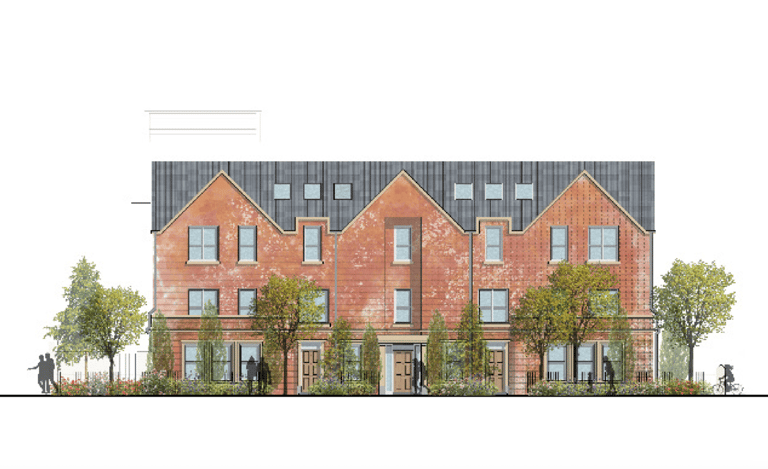
49-57 Ladas Drive
Updated a year ago
49-57 Ladas Drive is currently a vacant hardstanding area. Historically, it accommodated a car dealership and showroom, though these structures have since been removed. No vegetation or landscaping currently exists on-site, and the land is now underutilized.
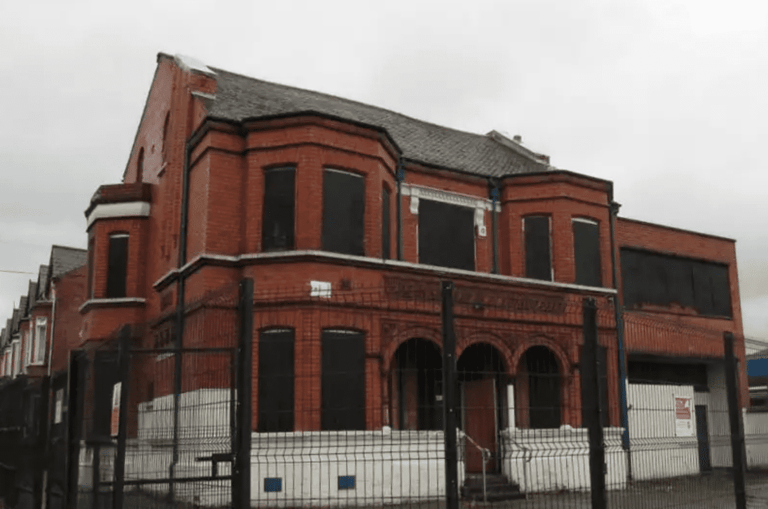
306 Antrim Road
Updated 2 years ago
The proposed development is situated on a site of 0.12 acres and is currently a vacant office building comprising 4,168 sq ft. The building is a two storey detached red brick building which previously housed the Probation Board NI offices. The site has been vacant since around 2017.
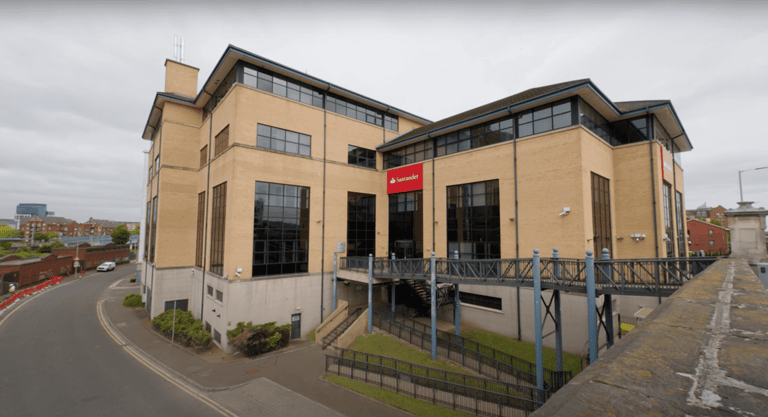
Santander House
Updated 6 months ago
Santander House is situated at 1 Mays Meadow, in the Laganside area of Belfast City Centre. The property occupies a prominent riverside position, bounded by Laganbank Road and adjacent to East Bridge Street and the Lagan Railway Bridge. The surrounding area forms part of the wider Mays Meadow development, which was one of the key regeneration zones initiated by the former Laganside Corporation.
